
Sort & repair

A damaged pallet is not a dead pallet.

Most pallets that get thrown away need one stringer plated or two deck boards replaced. Repair costs a fraction of replacement, and a properly repaired pallet carries the same load. We sort to a written grade standard and repair to it, on site or in our yard.

  • Written grading standard
  • Structural repair, not patching
  • On-site or off-site operations
  • Re-inspected before it ships
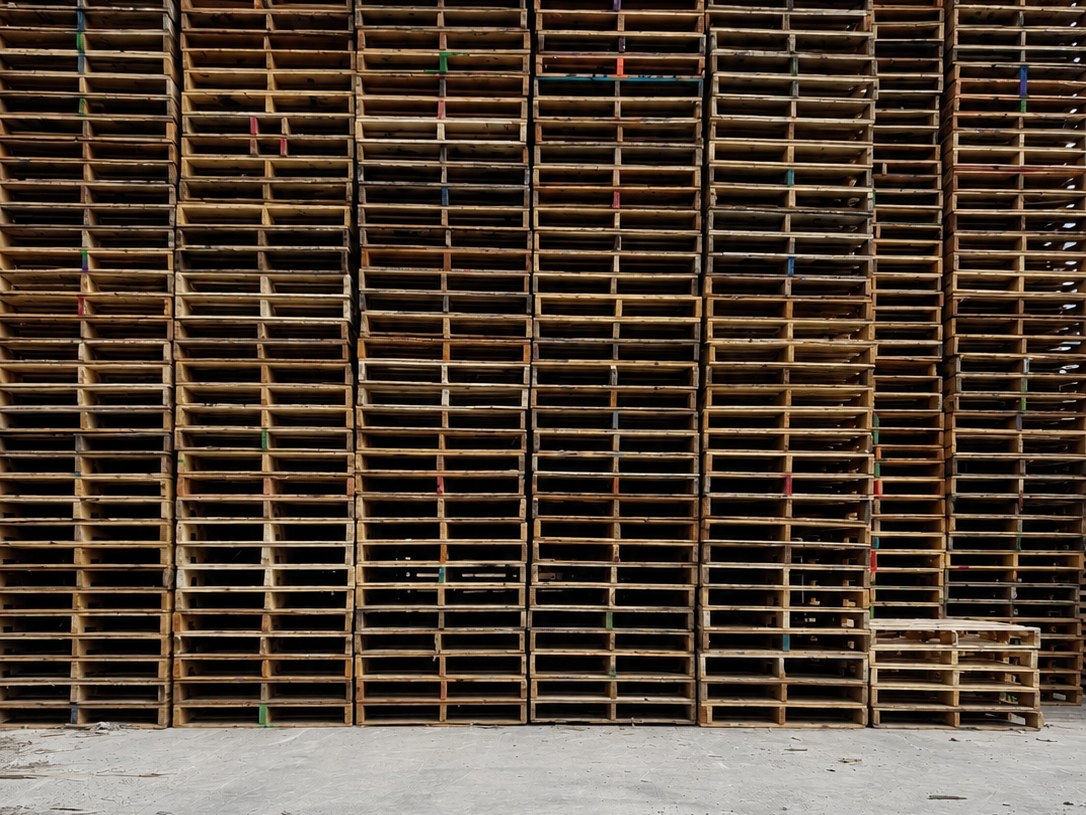
Tall stacked rows of sorted pallets waiting in the yard

Grading is written down, not eyeballed

We agree on a sample standard with you before the first load, and the sort line grades against it. That is the difference between a repair program you can plan around and a stack of pallets someone has to re-check at receiving.

  • #1: no visible stringer repair, full deck boards, rack ready
  • #2: sound with repaired stringers or replaced boards
  • Scrap: pulled out and recycled, never mixed back in

How we actually repair a pallet

Cracked stringers get a full-length companion board or are replaced outright. Split and missing deck boards come off and are replaced with matched lumber. Then the whole unit is re-nailed, swept for protruding fasteners, and stacked square.

  • Companion boards run full stringer length, not short plates
  • Replacement lumber matched to original thickness
  • Every repaired unit re-inspected before banding

On site when space allows, in our yard when it does not

If you have a corner of the building and steady volume, an on-site repair operation is the fastest loop. Pallets never leave the property. If space is tight, we haul, repair, and return on a fixed cycle instead.

  • On-site crews with their own tools and work area
  • Off-site cycles with dedicated trailer swaps
  • Turnaround committed in writing either way

The economics, plainly

Repair typically lands well under the cost of a comparable recycled pallet and far under new. Add the disposal cost you avoid and the labor your team stops spending, and repair programs usually pay for themselves before the second month.

  • Lower cost per usable pallet than buying replacements
  • Disposal and haul-off cost removed from the equation
  • Fewer product damage claims from failing pallets

How it works

01

Set the standard

We agree on sample pallets for each grade you will accept.

02

Sort

Every unit graded; scrap pulled out and recycled.

03

Repair

Stringers plated or replaced, boards swapped, units re-nailed.

04

Return

Re-inspected, banded, and back in your racking.

Questions

What operations managers ask us.

Is a repaired pallet as strong as a new one?

For most loads, yes. A properly plated stringer carries its rated load. For very heavy or automated applications we will tell you when new is the right call.

Can you repair custom sizes?

Yes, including off-size and heavy-duty builds. Send dimensions and photos.

What happens to pallets that cannot be repaired?

They go into the recycling stream: ground for mulch and fuel, metal separated out.

How much volume justifies an on-site crew?

Generally steady weekly volume and a work area we can use. We will tell you honestly after a site walk.

Let’s take the pallet problem off your plate.

Tell us your volumes and dock hours. We’ll build the program around them.

Request a quote