Total pallet management

One number to call for every pallet you touch.

Most plants buy pallets from one vendor, pay someone else to haul the broken ones away, and have a supervisor counting stacks in a notebook. We replace all of that with a single managed program, supply in, cores out, numbers at the end of the month.

  • Single point of accountability
  • Inventory tracked, not guessed
  • On-site and off-site options
  • Closed-loop programs available
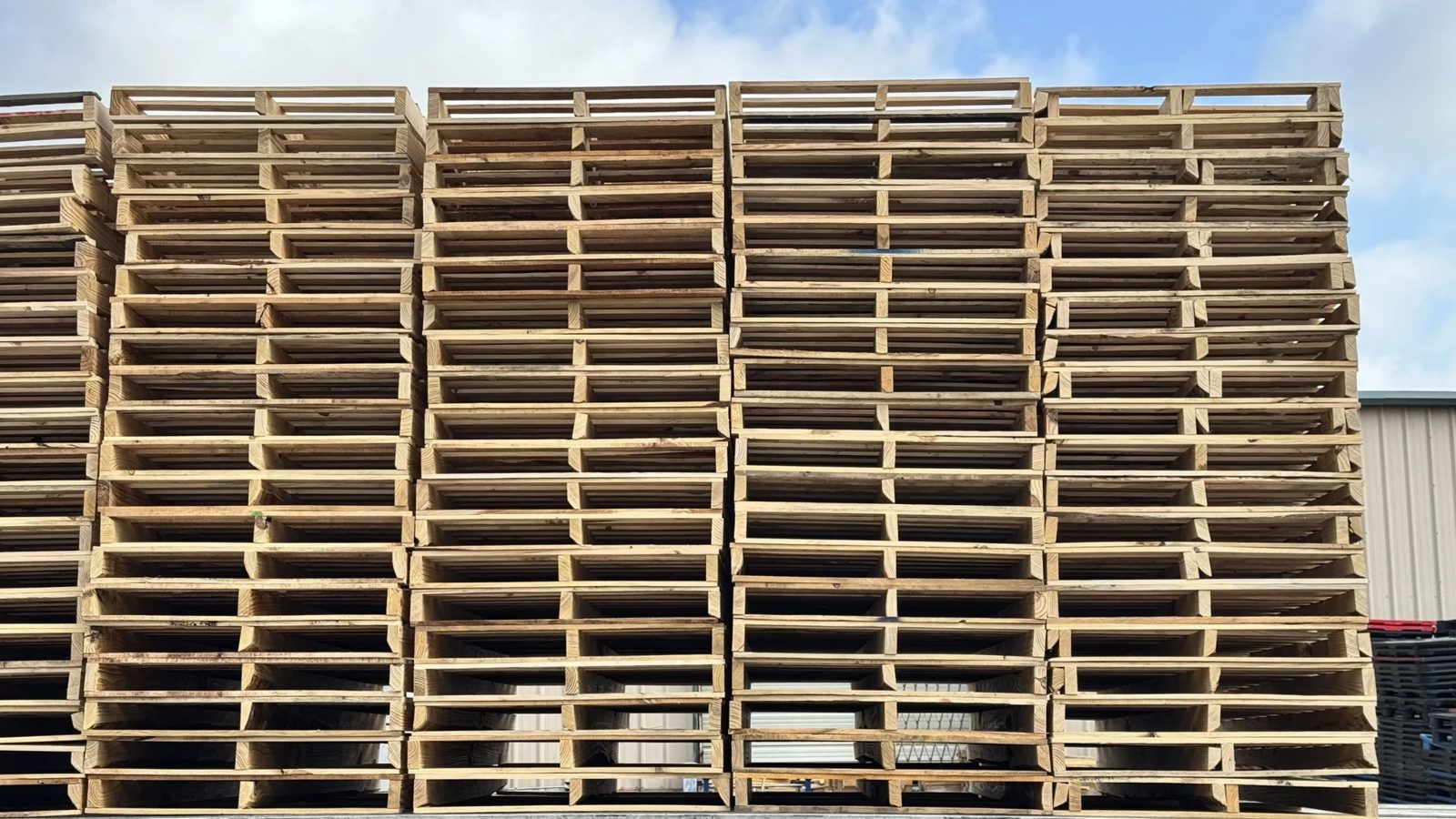
Warehouse logistics operation with managed pallet inventory

We start by watching how pallets actually move

Before we quote a program we walk the building: where pallets arrive, where they break, where they pile up, and who is spending time on them. Almost every facility we visit is losing more in labor and lost cores than in the price of the pallet itself.

  • Dock and staging walkthrough with your operations lead
  • Pallet flow mapped from receiving to outbound to disposal
  • Current cost per trip calculated, not estimated from a price list

Closed-loop programs keep your pallets yours

If your freight travels a fixed lane (plant to DC, DC to store, and back), those pallets should be coming home. We build the retrieval leg into the program so the same asset makes many trips instead of one.

  • Recovery routing on repeat lanes
  • Dedicated pools for custom or branded pallets
  • Repair and re-injection so cores stay in circulation

Reporting your CFO and your sustainability team can both use

You get counts in, counts out, repair volumes, scrap diverted, and cost per trip in a monthly summary. That is what makes a pallet program defensible in a budget review and citable in a sustainability report.

  • Monthly volume and cost-per-trip summary
  • Recovery rate and landfill diversion figures
  • Forecast planning ahead of seasonal peaks

Sized for one plant or a whole network

A single warehouse with three hundred pallets a week gets the same structure as a multi-site manufacturer, just fewer moving parts. Programs scale as you add locations, and standards stay identical across every site.

  • Single-site and multi-site programs
  • Consistent grading standard across all locations
  • Locked pricing terms with scheduled reviews

How it works

01

Walk the site

We visit, map the pallet flow, and count what is really moving.

02

Design the program

Grades, volumes, schedules, retrieval, and pricing written down.

03

Run it

Deliveries, pickups, repairs, and sorting on a fixed cadence.

04

Report and adjust

Monthly numbers and a standing review as your volume changes.

Questions

What operations managers ask us.

Do I have to use you for every pallet?

No. Some customers start with retrieval and recycling only, then add supply once they see the numbers.

Is there a contract?

Programs work best with a term so we can commit trailers and pricing, but we will run a trial period first.

What size operation does this make sense for?

Roughly a few hundred pallets a month and up. Below that, straight supply and scheduled pickup is usually simpler.

Can you work alongside our current supplier?

Yes. We often start on the recovery and repair side while an existing supply agreement runs out.

Let’s take the pallet problem off your plate.

Tell us your volumes and dock hours. We’ll build the program around them.

Request a quote